

Last Updated: November 2, 2026
Quick Summary
Finding an affordable divorce attorney in Tulsa County means matching the fee structure to the work your case requires, not chasing the lowest quote. Flat fees suit uncontested cases, hourly billing fits contested matters, and a retainer is a starting deposit rather than the total cost. Ask what each fee covers and which costs are billed separately.
- The biggest driver of divorce cost is conflict, not paperwork.
- An uncontested divorce is least expensive because it requires the least attorney time.
- Limited-scope representation has you hire an attorney for specific defined tasks.
- Ask whether payment plans are available at the consultation, not after the invoice.
- Legal aid uses an income screen and prioritizes cases like domestic violence protection.
Table of Contents
- What Affordable Divorce Representation Actually Looks Like in Tulsa County
- How to Reduce Divorce Costs Without Cutting Corners
- When an Uncontested Divorce Lawyer in Tulsa County Saves You the Most
- Divorce Attorney Payment Plans and Other Ways to Manage Fees
- Divorce Consultation Questions to Ask Before You Hire Anyone
- Free and Low-Cost Legal Help Options in Tulsa County
- Book a Consultation with Creek County Law
- Frequently Asked Questions
What Affordable Divorce Representation Actually Looks Like in Tulsa County
Finding an affordable divorce attorney in Tulsa County starts with understanding what you are paying for. Affordable does not mean cheap, and it rarely means the lowest quote wins. It means the fee structure matches the work your case requires, with no surprise invoices later.
The right question is not “who charges least?” but “what does this fee actually cover?” Divorce representation covers child custody, property division, support, and other divorce matters.
Fee Structures: Flat Fee, Hourly, and Retainer Explained
A flat fee is a single quoted price for a defined scope of work, usually an uncontested divorce with no disputed issues.
An hourly rate bills for time spent: calls, drafting, research, court appearances.
A retainer is an upfront deposit drawn down as work is performed. When it runs low, you replenish it.
Ask every attorney which structure they use and what sits outside it.
| Fee Structure | How It Works | Best For | Watch For |
|---|---|---|---|
| Flat fee | One quoted price for defined work | Uncontested, straightforward cases | Scope limits; extras billed separately |
| Hourly | Pay for time spent | Contested or unpredictable cases | Total cost unknown at the start |
| Retainer | Upfront deposit, drawn down | Cases expected to need ongoing work | Replenishment requirements |
How to Reduce Divorce Costs Without Cutting Corners
The biggest driver of divorce cost is conflict, not paperwork. Two people who agree on the house, the accounts, and a parenting schedule spend far less than two people litigating every line item.
Practical ways to lower the bill without sacrificing your interests:
- Gather documents before your first meeting: statements, deeds, tax returns, account balances
- Write down your priorities and your walk-away points before negotiations begin
- Keep routine questions to email rather than scheduled calls
A common mistake is treating every disagreement as a courtroom issue. Many are negotiation issues, and negotiation costs less.
When an Uncontested Divorce Lawyer in Tulsa County Saves You the Most
An uncontested divorce is one where both spouses agree on all terms: property, debt, support, and any children’s arrangements. It is the least expensive path because it requires the least attorney time.
An uncontested divorce lawyer in Tulsa County saves you the most when three things are true:
- You and your spouse have reached agreement on every issue
- Neither side is hiding assets or income
- No one is disputing custody or parenting time
Where any of those breaks down, the case becomes contested, and costs rise with each disputed issue. Custody disputes in particular extend timelines and increase attorney hours. Learn more in Managing Child Custody Disputes in Northern Oklahoma.
Divorce Attorney Payment Plans and Other Ways to Manage Fees
Ask directly whether payment plans are available, and bring it up at the consultation rather than after the invoice arrives. But a payment plan only changes when you pay, not how much, so the more important question is which level of legal help your case actually needs. The options below run from least to most attorney involvement, and the right choice depends on whether your case is agreed, whether children are involved, and whether there are hard-to-value assets.
Compare the levels of help before you compare prices
| Level of help | What you get | Best fit | Main risk |
|---|---|---|---|
| DIY with court self-help forms | Forms and procedural guidance; you file and appear yourself | Fully agreed, no children, simple assets, both parties cooperative | A mistake in the decree can be expensive to fix later; no one reviews the settlement for your interest |
| Document preparation service | Someone prepares the paperwork you file | Fully agreed, straightforward case, you are comfortable appearing | Preparation is not representation; no advice on whether terms are fair |
| Mediation plus limited-scope attorney | A mediator helps you reach terms; an attorney reviews the agreement | Disputes exist but both sides want to settle; children or a house are involved | Mediation can fail; you still need a fallback if it does |
| Limited-scope representation | Attorney handles defined tasks (review, one hearing, negotiation of one issue) | Mostly agreed case with one or two sticking points | Scope gaps; work outside the defined tasks is billed separately or not done |
| Full representation | Attorney handles the case end to end | Contested custody, hidden assets, a business, or an uncooperative spouse | Highest total cost; least predictable at the outset |
Payment plans and staged payments
A staged payment plan spreads a flat fee across installments. Firms vary on whether they require the full fee before filing or allow a partial payment to open the case. Ask what happens if the case settles early or runs longer than expected, a flat fee tied to a defined scope should address both. For hourly cases, confirm the replenishment threshold and schedule in writing before you agree to any payment arrangement.
Limited-scope representation, explained concretely
Limited-scope (sometimes called unbundled) representation is the option most readers overlook. You hire an attorney for specific tasks and handle the rest yourself: reviewing a proposed settlement agreement, drafting the decree after you and your spouse reach terms, or appearing at one hearing on a single disputed issue. The trade-off is real: the attorney is not monitoring the whole case, so deadlines and filings outside the agreed scope are your responsibility.
Mediation as a cost-control tool
Mediation is a structured negotiation led by a neutral third party, usually billed by the hour and often split between the parties. It is frequently cheaper than litigating the same dispute through hearings, and it works best when both parties want to settle and the dispute is about terms rather than hidden assets or safety. It is a poor fit when one side is concealing income or assets, when there is a history of domestic violence, or when one party refuses to negotiate in good faith.
What actually drives the total cost up
The biggest cost drivers are not the paperwork. They are disputes over custody and parenting time, disputes over the value of a business or retirement accounts, one party hiding income or assets, an uncooperative opposing party who forces repeated hearings, and delays caused by either side failing to produce documents.
Match the level of help to the case, not to the lowest quote. A cheap flat fee on a case that turns contested costs more in the end than paying for the right scope up front.
Divorce Consultation Questions to Ask Before You Hire Anyone
The initial consultation is where you learn whether the fee is genuinely affordable for your case. Ask these questions and write down the answers.
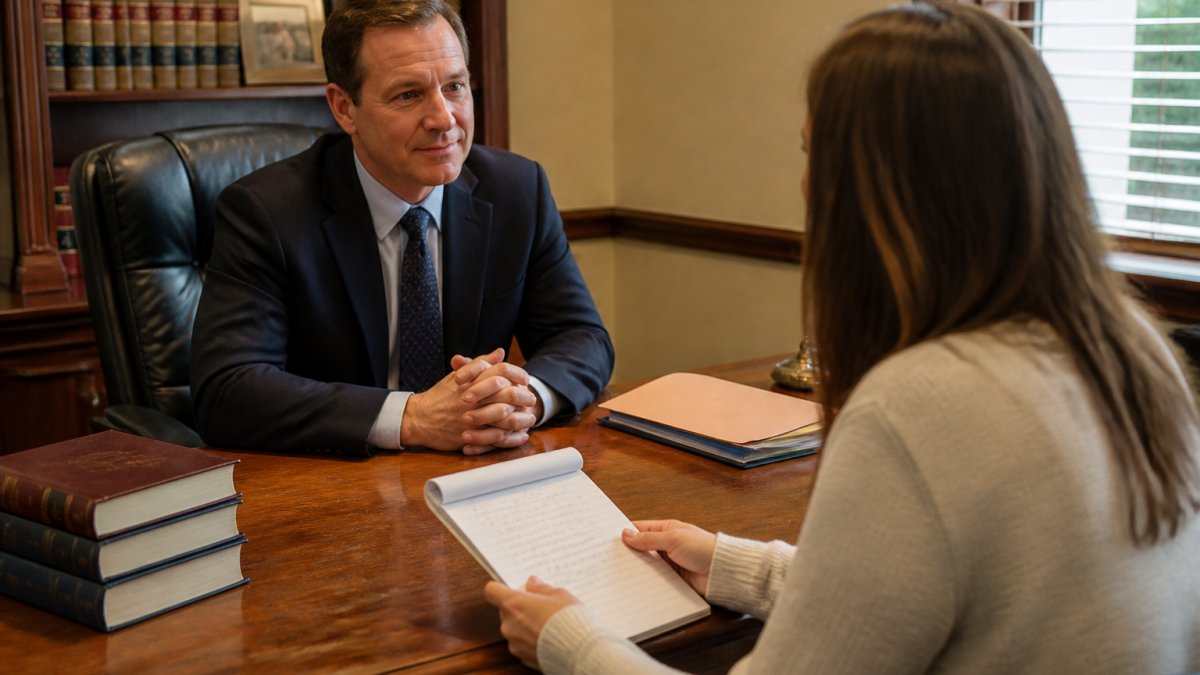
- What fee structure do you use for a case like mine, and what does it include?
- Which costs are billed separately from your fee?
- Based on what I have told you, what is a realistic total range?
- How often will I hear from you, and who answers my questions?
- Will I work with you directly or with another attorney or paralegal?
- What could make this case more expensive than we expect?
- Do you offer payment plans?
- What do you need from me to keep costs down?
Question five is worth asking before you pay anything, so you know who you will actually be speaking with.
Before that meeting, our guide on how to prepare for your first meeting with a family lawyer walks through the documents and details to bring so the consultation is productive rather than a costly overview.
Free and Low-Cost Legal Help Options in Tulsa County
Free legal help exists, but the eligibility rules are strict, the intake process is specific, and demand routinely exceeds capacity. Readers who treat “legal aid” as a single door usually waste weeks. It is several different doors, each with its own screening criteria and limits on what it will handle.
Who actually qualifies for legal aid
Legal aid organizations generally use a household income screen tied to the federal poverty guidelines. Eligibility rules differ by program, so check the current requirements with the organization directly.
Before you call, gather the documents the screener will ask for: photo ID, proof of address, recent pay stubs or benefit letters, and a short written summary of your case and what you want.
The intake steps, in order
- Call the program’s intake line, not its main office number. Most legal aid programs route new applicants through a dedicated intake line or an online application; calling the general office usually just redirects you.
- Complete the income and household screening. Expect questions about everyone in the household, not just you, and about assets as well as income.
- Describe the case type and the opposing party. The screener is checking both whether your issue is in the program’s priority areas and whether there is a conflict of interest.
- Wait for a callback or placement. If the program cannot take the case, ask whether it can refer you to a volunteer attorney panel, a reduced-fee panel, or a self-help clinic.
Law school clinics and volunteer attorney panels
Some law school clinics and volunteer attorney panels offer family law help, often free or reduced-fee. Their availability, timelines and case priorities vary, so confirm directly with each program.
Court self-help resources and their limits
Court self-help centers provide forms, procedural guidance, and sometimes brief workshops on completing divorce paperwork. They do not provide legal advice. Staff can tell you which form to file and where to file it; they cannot tell you whether the settlement you are about to sign protects your interest in the house or your retirement account.
Watch Out: Eligibility thresholds, priority case types, and intake hours change. Confirm current requirements directly with the organization before you rely on anything you read secondhand, including this article.
When legal aid is not available
If you do not qualify or the program cannot take your case, the realistic fallbacks are limited-scope representation (paying an attorney for a defined task such as reviewing a settlement), document-preparation services, mediation to narrow disputes before filing, and staged payment plans with a private attorney. The next section covers how to compare those options.
Book a Consultation with Creek County Law
Affordable representation comes down to fit: the right fee structure for the complexity of your case and clear scope.
G. Gene Thompson brings over 33 years of business management experience, and the firm has represented clients across more than 40 Oklahoma counties.
If you are comparing options and want straight answers about fees and process, contact our office to schedule a consultation and get a clear picture of what your case involves.
Frequently Asked Questions
How much does an affordable divorce attorney cost in Tulsa County?
Costs vary widely based on whether your divorce is uncontested or contested, how much property and debt you share, and whether custody is disputed. Attorneys typically charge a flat fee for simple uncontested cases, while contested matters run on hourly rates with an upfront retainer. Creek County Law does not publish fixed prices because every case differs, so ask for an itemized fee estimate during your consultation and confirm what the retainer covers before you sign.
Do divorce attorneys in Tulsa County offer payment plans?
Many do, though terms differ by firm. Ask directly whether the retainer can be paid in installments, whether hourly billing is invoiced monthly, and what happens if your case runs longer than expected. Get any payment arrangement in writing as part of your fee agreement. Creek County Law discusses fee structure and payment options during the initial consultation so you know the full picture before committing.
Can I get a divorce in Oklahoma without hiring an attorney?
Yes. Oklahoma allows self-represented parties, and uncontested divorces with no disputed custody or complex assets are the most realistic candidates. You will still need to prepare and file the correct court forms, meet filing requirements, and handle service of process correctly. A single consultation with an attorney to review your paperwork before filing is often the cheapest way to reduce the risk of rejected filings or missed deadlines.
What questions should I ask before hiring an affordable divorce attorney?
Ask how fees are structured, what the retainer covers, and who handles your case day to day. Confirm the attorney’s experience with Tulsa County family court, ask for a realistic timeline, and find out how quickly calls and emails are returned. Also ask what happens if the case settles versus goes to trial, since that changes cost significantly. Bring a written list so you compare answers across firms fairly.
Divorce is stressful enough without wondering what the final bill will look like. Creek County Law offers honest communication, individualized attention, and one-on-one counsel from an attorney with decades of experience, so you understand the cost and the plan before work begins. Get started with Creek County Law and schedule a consultation to discuss your case.
